
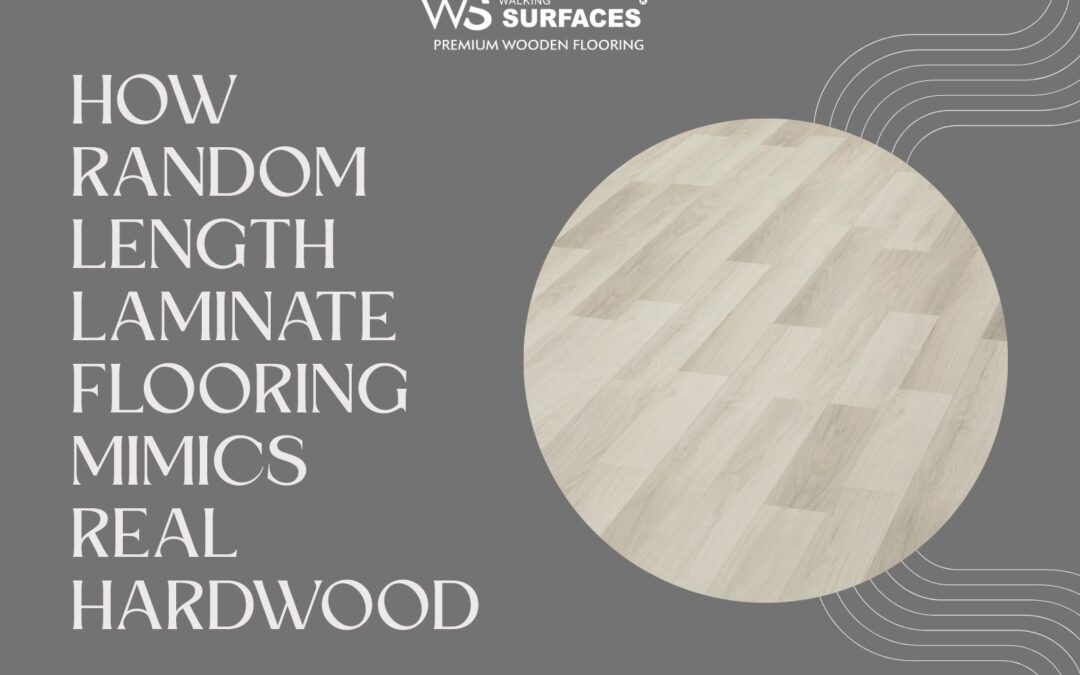
For many homeowners and designers, the charm of real hardwood floors lies in their organic variation. No two planks are exactly the same, and that natural inconsistency creates warmth, depth, and visual interest. Traditional laminate flooring, however, was once criticized for looking repetitive and artificial. That perception has changed significantly with the introduction of random length laminate flooring, a design approach that closely reflects the way real wood floors are installed and experienced.
This evolution in laminate design has made it possible to achieve an authentic hardwood appearance without the cost, maintenance, or installation challenges associated with solid wood. Let’s explore how this flooring style successfully captures the essence of natural timber and why it has become a preferred choice in modern interiors.
Understanding the Concept of Random Length Planks
In real hardwood flooring, planks are cut from trees in varying lengths. When installed, these boards create a naturally staggered layout that feels organic rather than manufactured. Random plank laminate flooring follows the same principle. Instead of uniform, identical boards, the flooring consists of planks in multiple lengths that are installed in a mixed pattern.
This variation breaks the monotony often associated with older laminate floors. The eye doesn’t catch repeating joints or predictable patterns, which makes the surface feel more realistic. The result is a floor that mirrors the irregular beauty found in genuine hardwood installations.
Visual Authenticity Through Irregular Patterns
One of the strongest reasons random-length designs work so well is visual rhythm. Real wood floors never align perfectly across a room, and that subtle imperfection is what gives them character. By using planks of different lengths, laminate flooring avoids straight-line seams that instantly reveal a synthetic origin.
This approach enhances the natural wood look laminated flooring aims to achieve. Whether the design is inspired by oak, walnut, teak, or maple, random-length layouts replicate how these woods appear in traditional homes and heritage spaces. The floor looks layered, dynamic, and far closer to nature than standard repetitive designs.
Advanced Printing and Surface Technology
Beyond plank length, modern laminate floors rely on advanced printing technology to deepen realism. High-resolution imaging captures the grain patterns, knots, and tonal shifts found in real timber. When these visuals are paired with varied plank sizes, the illusion becomes even stronger.
Many high-quality laminated flooring options also feature textured surfaces that align with the printed design. This synchronization means the raised grain follows the visual grain, closely mimicking how natural wood feels underfoot. When light hits the floor, shadows fall differently on each plank, further enhancing authenticity.
Seam Placement That Feels Natural
Another subtle but important factor is seaming placement. In hardwood floors, seams are unpredictable because boards vary in size. Random-length laminate recreates this effect by ensuring joints are staggered irregularly across the room. This layout prevents the “brick pattern” look that can make flooring appear manufactured.
The outcome is a floor that flows naturally from one end of the room to the other. It feels intentional yet effortless, much like traditional wooden flooring found in older homes and luxury residences.
A Better Match for Contemporary Indian Homes
The demand for laminated wood flooring in India has grown rapidly due to changing lifestyles, urban living, and design preferences. Homeowners want floors that look premium but can withstand temperature variations, humidity, and daily wear. Random-length laminate meets these expectations while delivering a refined aesthetic.
Indian interiors often combine modern layouts with warm, earthy materials. The flexibility of laminate also makes it suitable for apartments, villas, offices, and retail spaces.
Design Versatility Across Spaces
Random-length laminate flooring works beautifully across different room sizes. In compact rooms, the varied plank lengths create the illusion of depth, making the space feel larger and more open. In expansive areas, the irregular layout adds character and avoids a flat, repetitive appearance.
This versatility allows designers to maintain consistency throughout a project while still achieving a natural, handcrafted feel. From living rooms and bedrooms to corridors and meeting spaces, the flooring adapts seamlessly without overpowering the interior design.
Practical Benefits Without Visual Compromise
While the aesthetic appeal is strong, practicality remains a major reason for choosing laminate. Unlike solid wood, laminate flooring is easier to install, more resistant to scratches, and simpler to maintain. Random-length designs do not add complexity to upkeep, yet they dramatically elevate the look of the floor.
For families, working professionals, and commercial users, this balance between beauty and durability is essential. The floor retains its charm over time without demanding extensive care or refinishing.
A Modern Interpretation of Classic Hardwood
Ultimately, random-length laminate flooring represents a thoughtful reinterpretation of traditional wood flooring. It doesn’t attempt to be flashy or overly stylized. Instead, it respects the natural characteristics of wood variation, imperfection, and texture and translates them into a modern, accessible material.
Conclusion
The success of random-length laminate flooring lies in its ability to replicate what makes real hardwood timeless: variation, depth, and natural flow. Through mixed plank sizes, realistic textures, and thoughtful installation patterns, laminate flooring has evolved into a sophisticated alternative to traditional wood.
For anyone seeking the elegance of hardwood without its limitations, this flooring style offers the perfect balance. It proves that authenticity isn’t just about material, it’s about design choices that respect nature while embracing innovation.